
Root Canal Treatment
What is root canal treatment?
Root canal treatment is a tooth-saving procedure used when the pulp — the living tissue and nerve inside a tooth — becomes inflamed or infected.
This can happen as a result of deep decay, significant trauma or a crack that has allowed bacteria to reach the inner part of the tooth. Without treatment, infection can progress and may eventually result in severe pain or a dental abscess.
The aim of root canal treatment is to remove the infected or damaged tissue, clean and disinfect the inside of the tooth, and then seal it to help prevent further infection.
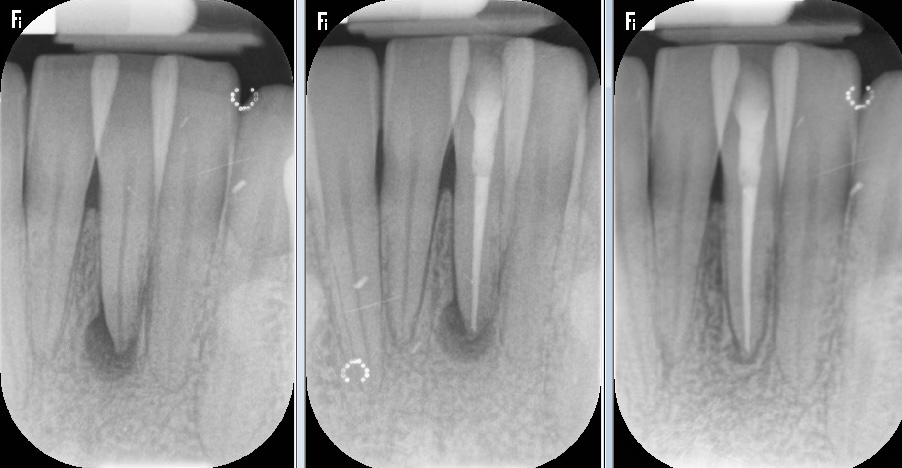
Successful root canal treatment, leading to healing abcsess over time. Work by Dimitri Baciu
Signs you may need root canal treatment
Recognising the warning signs can help you seek treatment before an infection becomes more serious.
Symptoms can include:
- Severe or persistent toothache – particularly pain that continues or becomes worse when biting or chewing.
- Prolonged sensitivity – especially to hot or cold drinks and foods, where the sensitivity continues after the temperature stimulus has gone.
- Swelling or tenderness – particularly in the gum around the affected tooth.
- Tooth discolouration – a tooth may become noticeably darker than the teeth around it.
- A dental abscess – this can appear as a small, pimple-like swelling on the gum and may sometimes release fluid.
Not every painful tooth requires root canal treatment, so an examination is essential to establish the cause of your symptoms.
What can I expect during root canal treatment?
The procedure is carried out under local anaesthetic to keep you comfortable.
Your dentist will carefully remove the damaged or infected pulp, clean and disinfect the internal root canal system, and then fill and seal the canals. The tooth will subsequently be restored with an appropriate filling or, where necessary, a crown to provide additional protection.
The number of appointments required varies depending on the tooth involved, the complexity of its root canal system and the extent of the infection.
Does root canal treatment hurt?
Root canal treatment has a reputation for being uncomfortable, but modern dentistry has changed considerably.
With effective local anaesthesia and careful techniques, most patients are comfortable during the procedure. In fact, root canal treatment is often undertaken specifically to relieve the pain caused by an infected or inflamed tooth.
If you are nervous about treatment, please let us know. We can take additional time to explain each stage and ensure you remain as comfortable and relaxed as possible.
What happens after root canal treatment?
It is normal for a root-filled tooth and the surrounding area to feel slightly tender for a short period following treatment.
Over-the-counter pain relief such as paracetamol or ibuprofen may help manage any temporary discomfort, provided these medicines are suitable for you.
If pain, swelling or other symptoms persist or worsen, contact the practice so that we can assess you.
What is the alternative to root canal treatment?
If a tooth cannot be successfully treated with root canal therapy, or if root canal treatment is not appropriate, extraction may be necessary.
A missing tooth can subsequently be replaced using options such as a dental implant, bridge or denture. Wherever possible and appropriate, however, our preference is to preserve your natural tooth.
Why is a crown often recommended after root canal treatment?
A tooth that has undergone root canal treatment can be more susceptible to fracture because of the amount of tooth structure that may have been lost through decay, existing restorations and the treatment itself.
For this reason, a crown is often recommended where additional protection is required, particularly for back teeth, which are exposed to significant chewing forces.
Your dentist will assess the remaining tooth structure and recommend the most appropriate restoration for your individual situation.
Testimonials

Chrissie Parker
3 months ago
Always excellent care and advice. I have complete trust in Deborah and her staff

Ron Docking
3 months ago
Broken tooth and chip stuck under gum while on holiday. First day back, Dmitri carefully removed broken chip,filled remaining tooth.Excellent speedy service!

David Perks
3 months ago
Courteous and helpful service. I have been a client for many years for regular tooth maintenance and repair

Rod Parrish
3 months ago

Elliot
3 months ago
Been coming here since I was 8. It is a very nice practice and everyone is very welcoming

Vicky Salter
4 months ago
I have been coming to New Road Dental practice since I was a baby. I am now 34 and this will always be my dentist. I am always treated with such great care and patience. From the dentist to the hygienist, I am always given such great advice on how to keep my teeth and gums healthy. Reception are always the loveliest ladies too.

Maximilian Harazin
5 months ago
I’ve been going to New Road Dental for my regular checkups and dental work for years, and I couldn’t be happier. My dentist, Debbie, is absolutely wonderful. She always treats me with outstanding professionalism, genuine friendliness, and respect. I highly recommend her and the practice to anyone looking for a great dentist!

Alison Speed
5 months ago
All team members are Friendly & helpful

John Willis
5 months ago
The staff are all very cheerful, welcoming and professional. It is easy to make an appointment and once at the surgery there is very little waiting time. I have been coming to this practice for dental treatment since 1981 and I have always been extremely satisfied with the service.

Ken Snow
6 months ago
I’ve received dental treatment at NRDP over many years and have always found them to be very professional & accommodating. Equipment is modern and under Dimitri’s leadership the Team provides a warm & friendly environment in which to have treatment . Ken S.

Rosalind Pritchard
6 months ago
Excellent level of treatment, good clear explanation of work required. Very friendly staff who go the extra mile to be helpful. Thank you all.

Sam and Samantha Orsborne
6 months ago
From the moment we arrived, we were made to feel really welcome. The receptionist was so friendly and kind, and took the time to chat with us which instantly put us at ease. There’s parking right outside the building as well, which made getting there really easy and stress-free.
We went for teeth whitening, and before anything started, Dimitri explained everything properly to us in a way that was easy to understand. We never felt rushed and could ask as many questions as we wanted, which made us feel really comfortable and confident from the start. You can tell they genuinely care about their patients and want you to feel relaxed.
The clinic itself is very modern and spotless, with really impressive equipment. We had 3D scans done for the moulds, which was such a cool experience and made everything feel very high-tech and precise. Throughout the whole appointment we felt like we were in safe hands and were looked after so well. Overall, it was such a positive experience and we received amazing care from start to finish.

Cezary Kucewicz
7 months ago
I came in for an emergency appointment, which ultimately led to the extraction of my wisdom tooth. I’m usually quite nervous about visiting the dentist, but Debbie and her team were absolutely incredible – without a doubt the best dental experience I’ve ever had!
From the moment I walked in, their warmth, friendliness and professionalism immediately put me at ease. The whole procedure was carried out quickly, smoothly and completely painlessly, bringing instant relief after several days of tooth pain.
I’m so grateful for the care I received and couldn’t recommend New Road Dental Practice more highly. Truly outstanding!

Robert Moss
8 months ago
I have been with this Surgery since 2020 and have always received an excellent service from the team. Communication is a massive plus especially the appointment reminders.

Christine Bainbridge
8 months ago
Dimitri and his team strike the right balance between top-notch professional clinical treatment and a friendly atmosphere. It’s a pleasure to go to New Road Dental practice, where I know I can expect first-class care. Excellent patient experience: if I could award more than five stars, I would! Thank you everyone.

Beverley Elston
9 months ago
Dr. Deborah Johnson is my dentist.
I’m a new patient at this practice and I have received nothing but great service from all the staff members, a warm welcome.
Thorough and great results from my treatment.
I would highly recommend this dental practice.
Thank you to the team Beverley

Chris Dyson
10 months ago
I am usually reluctant to post reviews in case it jinxes an otherwise good product or service, but in the case of New Road Dental practice I have no such reservations. They are excellent! During an appointment with Debbie today, I had what I shall call a composite reconstruction. Most of my tooth was gone but she did an amazing job of rebuilding it so that it is now indistinguishable from the one next to it. All the while taking care to keep me informed in her friendly and professional way. Many thanks to Debbie, her able assistant and all the team at New Road Dental practice.

Kathryn Bowman
10 months ago
From the moment you arrive you are met with a welcome smile.
All the team are kind, friendly and professional.
I’ve been a patient of Dimitri’s for a few years now and he is so patient, putting you at ease and explaining fully the required treatment.
“Kindness, professional expertise and reliability in an emergency…the perfect Saffron Walden dentist.