Hygienist
Regular dental care for the entire family
Regular dental check-ups and Hygienist maintenance are vital to maintain a healthy mouth. Often dental specialists can identify small problems at a check-up and stop them before they progress and require more expensive and lengthy treatment. Don’t put off visiting for another day – we can help even the most nervous patients feel at ease.
If you are in need of a dentist, look no further. We provide private dental care and are currently accepting new patients. We cover all facets of dentistry, providing everything from check-ups to fillings and root canals. Our dentists specialise in putting patients at ease and making you feel comfortable while we treat you.
Why is dental hygiene important?
Looking after your teeth and gums is one of the most effective ways to protect your long-term oral health.
Daily brushing and interdental cleaning help control plaque, while professional hygiene treatment can remove hardened deposits that cannot be effectively removed with a toothbrush alone.
Maintaining healthy gums can also reduce the risk of gum disease, one of the most common causes of tooth loss in adults.
Good oral health is also an important part of overall wellbeing. Research has identified associations between gum disease and a number of systemic health conditions, including diabetes and cardiovascular disease.
What are plaque and tartar?
Plaque is a soft, sticky film containing bacteria that continually forms on the surfaces of your teeth.
When plaque is not removed effectively, it can harden into tartar, also known as calculus. Once hardened, calculus cannot usually be removed effectively with normal brushing at home and requires professional removal.
Persistent plaque and calculus can contribute to gum inflammation and periodontal disease. If left untreated, advanced gum disease can result in gum recession, bone loss, loose teeth and, ultimately, tooth loss.
What does a dental hygienist do during a routine appointment?
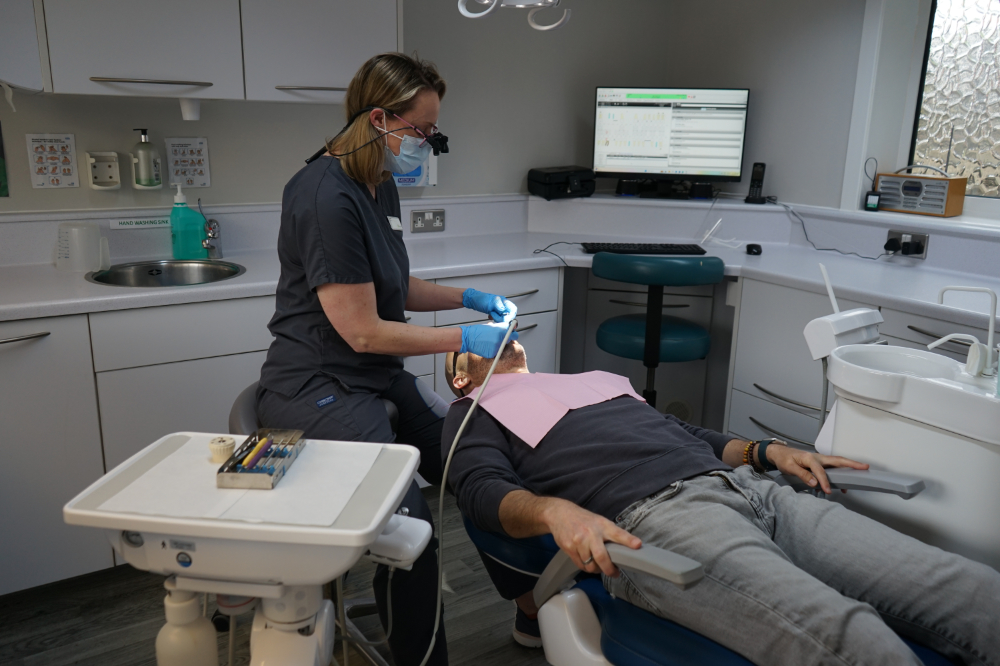
Your hygienist will assess your teeth and gums before carrying out a professional clean to remove plaque, calculus and staining from accessible tooth surfaces.
Your teeth may then be polished to leave them feeling clean and smooth.
A key part of the appointment is also personalised oral hygiene advice. Your hygienist can show you techniques and recommend suitable brushes or interdental cleaning aids based on your individual needs.
We may also carry out appropriate soft-tissue checks, including oral cancer screening, as part of your ongoing preventive care.
Where appropriate, fluoride treatment may be recommended to help strengthen and protect teeth that are at increased risk of decay.
How often should I visit the dental hygienist?
There is no single interval that is right for every patient.
Your dentist or hygienist will recommend an appropriate frequency based on your oral health, gum condition, plaque levels, lifestyle and individual risk factors.
Some patients benefit from routine hygiene visits every few months, while others may require less frequent appointments.
If you have more advanced gum disease, we may recommend assessment or treatment from a dental professional with a particular interest or specialist expertise in periodontal care.
What are the benefits of regular hygiene appointments?
Regular professional hygiene appointments, combined with effective home care, can help you:
- Maintain healthier teeth and gums
- Reduce plaque and calculus build-up
- Reduce the risk of tooth decay and gum disease
- Manage bleeding or swollen gums
- Improve bad breath
- Remove surface staining
- Maintain the health of existing dental restorations
- Understand how to improve your oral hygiene routine
Most importantly, professional hygiene treatment works alongside your daily home care rather than replacing it.
How can my dental hygienist help prevent gum disease?
Your hygienist can remove plaque and hardened calculus from areas that are difficult to clean effectively at home.
They can also assess your gum health and help you improve your brushing and interdental cleaning technique.
If there are early signs of gum disease, identifying and addressing them promptly can help prevent the condition from progressing.
Does dental hygiene treatment hurt?
Dental hygiene treatment should be comfortable for most patients, although you may experience some sensitivity during scaling, particularly where there is significant calculus, gum inflammation or exposed tooth surfaces.
We always work at your pace and will check that you are comfortable throughout the appointment. If you need a break, simply let us know.
Testimonials

Chrissie Parker
3 months ago
Always excellent care and advice. I have complete trust in Deborah and her staff

Ron Docking
3 months ago
Broken tooth and chip stuck under gum while on holiday. First day back, Dmitri carefully removed broken chip,filled remaining tooth.Excellent speedy service!

David Perks
3 months ago
Courteous and helpful service. I have been a client for many years for regular tooth maintenance and repair

Rod Parrish
3 months ago

Elliot
3 months ago
Been coming here since I was 8. It is a very nice practice and everyone is very welcoming

Vicky Salter
4 months ago
I have been coming to New Road Dental practice since I was a baby. I am now 34 and this will always be my dentist. I am always treated with such great care and patience. From the dentist to the hygienist, I am always given such great advice on how to keep my teeth and gums healthy. Reception are always the loveliest ladies too.

Maximilian Harazin
5 months ago
I’ve been going to New Road Dental for my regular checkups and dental work for years, and I couldn’t be happier. My dentist, Debbie, is absolutely wonderful. She always treats me with outstanding professionalism, genuine friendliness, and respect. I highly recommend her and the practice to anyone looking for a great dentist!

Alison Speed
5 months ago
All team members are Friendly & helpful

John Willis
5 months ago
The staff are all very cheerful, welcoming and professional. It is easy to make an appointment and once at the surgery there is very little waiting time. I have been coming to this practice for dental treatment since 1981 and I have always been extremely satisfied with the service.

Ken Snow
6 months ago
I’ve received dental treatment at NRDP over many years and have always found them to be very professional & accommodating. Equipment is modern and under Dimitri’s leadership the Team provides a warm & friendly environment in which to have treatment . Ken S.

Rosalind Pritchard
6 months ago
Excellent level of treatment, good clear explanation of work required. Very friendly staff who go the extra mile to be helpful. Thank you all.

Sam and Samantha Orsborne
6 months ago
From the moment we arrived, we were made to feel really welcome. The receptionist was so friendly and kind, and took the time to chat with us which instantly put us at ease. There’s parking right outside the building as well, which made getting there really easy and stress-free.
We went for teeth whitening, and before anything started, Dimitri explained everything properly to us in a way that was easy to understand. We never felt rushed and could ask as many questions as we wanted, which made us feel really comfortable and confident from the start. You can tell they genuinely care about their patients and want you to feel relaxed.
The clinic itself is very modern and spotless, with really impressive equipment. We had 3D scans done for the moulds, which was such a cool experience and made everything feel very high-tech and precise. Throughout the whole appointment we felt like we were in safe hands and were looked after so well. Overall, it was such a positive experience and we received amazing care from start to finish.

Cezary Kucewicz
7 months ago
I came in for an emergency appointment, which ultimately led to the extraction of my wisdom tooth. I’m usually quite nervous about visiting the dentist, but Debbie and her team were absolutely incredible – without a doubt the best dental experience I’ve ever had!
From the moment I walked in, their warmth, friendliness and professionalism immediately put me at ease. The whole procedure was carried out quickly, smoothly and completely painlessly, bringing instant relief after several days of tooth pain.
I’m so grateful for the care I received and couldn’t recommend New Road Dental Practice more highly. Truly outstanding!

Robert Moss
8 months ago
I have been with this Surgery since 2020 and have always received an excellent service from the team. Communication is a massive plus especially the appointment reminders.

Christine Bainbridge
8 months ago
Dimitri and his team strike the right balance between top-notch professional clinical treatment and a friendly atmosphere. It’s a pleasure to go to New Road Dental practice, where I know I can expect first-class care. Excellent patient experience: if I could award more than five stars, I would! Thank you everyone.

Beverley Elston
9 months ago
Dr. Deborah Johnson is my dentist.
I’m a new patient at this practice and I have received nothing but great service from all the staff members, a warm welcome.
Thorough and great results from my treatment.
I would highly recommend this dental practice.
Thank you to the team Beverley

Chris Dyson
10 months ago
I am usually reluctant to post reviews in case it jinxes an otherwise good product or service, but in the case of New Road Dental practice I have no such reservations. They are excellent! During an appointment with Debbie today, I had what I shall call a composite reconstruction. Most of my tooth was gone but she did an amazing job of rebuilding it so that it is now indistinguishable from the one next to it. All the while taking care to keep me informed in her friendly and professional way. Many thanks to Debbie, her able assistant and all the team at New Road Dental practice.

Kathryn Bowman
10 months ago
From the moment you arrive you are met with a welcome smile.
All the team are kind, friendly and professional.
I’ve been a patient of Dimitri’s for a few years now and he is so patient, putting you at ease and explaining fully the required treatment.
“Kindness, professional expertise and reliability in an emergency…the perfect Saffron Walden dentist.